
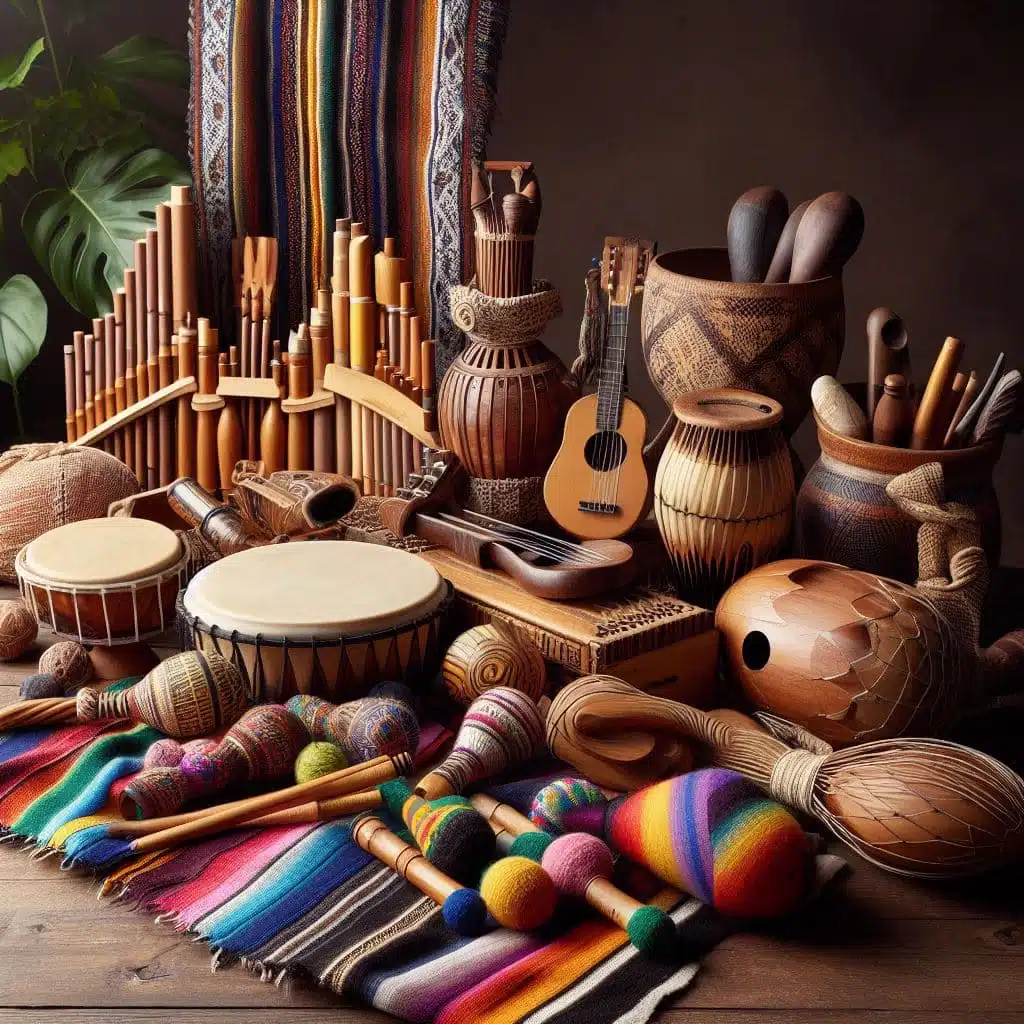
Andean music is a rich and diverse tradition originating in the Andes region of South America, stretching from Venezuela to Argentina. It blends indigenous, European, African, and Asian influences, creating a distinctive sound. This article explores the origins and significance of emblematic Andean instruments, including the charango, quena, bombo legüero, caja de chaya, pezuñas de percusión, sicus, and the rain stick.
The Charango: A Small Lute with a Big Sound
The charango is a small lute-like instrument, often made from armadillo shell or wood, with ten strings arranged in five courses. Popular in Bolivia, Peru, Ecuador, Chile, and Argentina, the charango plays both melodic and rhythmic roles in Andean music.
It likely evolved from the Spanish vihuela in the 16th century, adapted by indigenous communities using local materials. By the 18th century, it symbolized resistance and identity, especially among miners and peasants.

The Quena: A Flute with a Soul
The quena is a vertical flute traditionally made from cane or wood. With a dark, textured timbre, it plays a key role in ceremonial and folkloric Andean music.
Its pre-Columbian roots trace back to Inca and Nazca civilizations. Despite suppression after the Spanish conquest, the quena survived, preserving its sacred and cultural roles.

The Bombo Legüero: A Drum that Echoes in the Distance
The bombo legüero, made from hollowed wood and goat skin, produces deep resonant sounds. Played with wooden sticks, it echoes through festivals in Argentina and Chile.
Originating from European military drums, it was adapted by locals into a symbol of rural identity and resistance, used in both celebrations and revolutions.

The Caja de Chaya: A Tambourine with a History
The caja de chaya is a tambourine with animal skin and jingles. Common in northwestern Argentina, it adds rhythm to chaya festivals celebrating Pachamama and joy.
Introduced during colonial times, it merged with indigenous practices and evolved into a key element in zamba, gato, and chacarera performances.

The Pezuñas de Percusión: A Rattle with a Twist
Made from animal hooves, the pezuñas de percusión create a rattling rhythm unique to Bolivia, Peru, and Ecuador. Used in sikuriada, they honor animals and nature.
Rooted in Aymara and Quechua traditions, they symbolize gratitude and the spiritual bond with the animal world.

The Sikus: A Traditional Andean Panpipe
The sikus consists of two rows of cane tubes (ira and arca), played in complement. It is common across Peru, Bolivia, Chile, and Ecuador, with origins in the Mochica culture.

A Rain Stick
The rain stick mimics falling rain. It is a long tube filled with pebbles or seeds, believed to originate from the Diaguita people in Chile. Today, it’s used in folk music and sound therapy worldwide.

Andean Music: A Living and Diverse Musical Tradition
Andean music is more than sound; it is identity, celebration, and resistance. As a blend of global and local influences, it represents the history and heart of the Andes. Through instruments and rituals, it connects past and present, inviting all to listen and discover.
Learn more about Latin American music on my site.