
Dizzy Gillespie in Buenos Aires: A Jazz Legend Meets Tango
In 1956, Dizzy Gillespie, one of the most influential and innovative jazz musicians of all time, visited Buenos Aires, Argentina, as part of a cultural exchange program sponsored by the U.S. government. During his stay, he met Osvaldo Fresedo, a legendary tango composer and orchestra leader. Their encounter gave rise to a remarkable musical collaboration, blending the richness of tango with the improvisational spirit of jazz.
Who Was Dizzy Gillespie?
Dizzy Gillespie, born John Birks Gillespie in 1917 in South Carolina, USA, began playing the trumpet early in life. He quickly developed a distinctive style that stood out from his peers. As a pioneer of bebop—a complex, fast-paced form of jazz—Gillespie revolutionized the genre. He also embraced Afro-Cuban, calypso, and bossa nova, crafting a signature sound defined by his bent trumpet and puffed cheeks.
More than a virtuoso, Gillespie was a charismatic performer known for his humor and warmth on stage. He mentored young musicians, led numerous bands, and earned widespread recognition. Among his many honors were a Grammy Lifetime Achievement Award, a National Medal of Arts, and a star on the Hollywood Walk of Fame.
Who Was Osvaldo Fresedo?
Osvaldo Fresedo, affectionately called “El Pibe de La Paternal,” was born in 1897 in Buenos Aires. A skilled bandoneonist from a young age, he formed his first orchestra in 1921. Over the decades, Fresedo became a central figure in the golden age of tango, composing and recording hundreds of classic pieces such as Vida mía, El espiante, and Sollozos.
Fresedo was celebrated for his refined tango style, which often incorporated elements of jazz, classical, and romantic music. He introduced instruments like the harp and vibraphone into tango arrangements, creating a sophisticated and elegant sound. His innovations helped shape instrumental tango as a genre focused more on musical expression than lyrics.
How Did They Meet and Collaborate?
As part of a diplomatic tour organized by the U.S. Department of State and the American National Theatre, Gillespie toured Latin America in 1956. During his time in Argentina, he performed at the prestigious Teatro Colón, invited by the Bop Club, and visited nightclubs and radio stations where he met local talents like Lalo Schifrin and Leandro Barbieri.
Gillespie expressed a strong interest in tango and was soon introduced to Osvaldo Fresedo. Their meeting was more than musical—it was a meeting of minds. Gillespie visited Fresedo’s home, where they exchanged ideas and played music together. Their mutual respect and shared passion for innovation quickly led them to the studio.
Recording
Together with Fresedo’s orchestra, Gillespie recorded four classic tangos: Vida mía, Adiós muchachos, El choclo, and La cumparsita. These recordings were made in a single take, without rehearsals or written arrangements, showcasing the spontaneity and brilliance of both musicians. The result was a rare vinyl titled Dizzy Gillespie y su trompeta en Buenos Aires, now a prized collector’s item.
Impact and Legacy
The meeting between Dizzy Gillespie and Osvaldo Fresedo was a landmark moment in both jazz and tango history. It demonstrated how cultural exchange and musical curiosity could unite different genres to create something timeless. This moment of fusion resonated far beyond Buenos Aires.
Gillespie became a key figure in Latin jazz, incorporating new rhythms and sounds into his music. Fresedo, inspired by the collaboration, continued to push the boundaries of tango, even dedicating a piece titled Dizzy to his friend in 1961. Their connection sparked a wave of cross-genre experimentation that continues to influence artists today.
Notable musicians like Lalo Schifrin, Astor Piazzolla, and Paquito D’Rivera carried this legacy forward—blending jazz and tango in innovative ways. Their work speaks to the lasting power of Gillespie and Fresedo’s collaboration.
Conclusion
The musical encounter between Dizzy Gillespie and Osvaldo Fresedo remains a powerful symbol of artistic unity. It brought together two rich traditions—jazz and tango—and left a lasting imprint on global music. Their collaboration reminds us of music’s potential to transcend boundaries and inspire new generations.
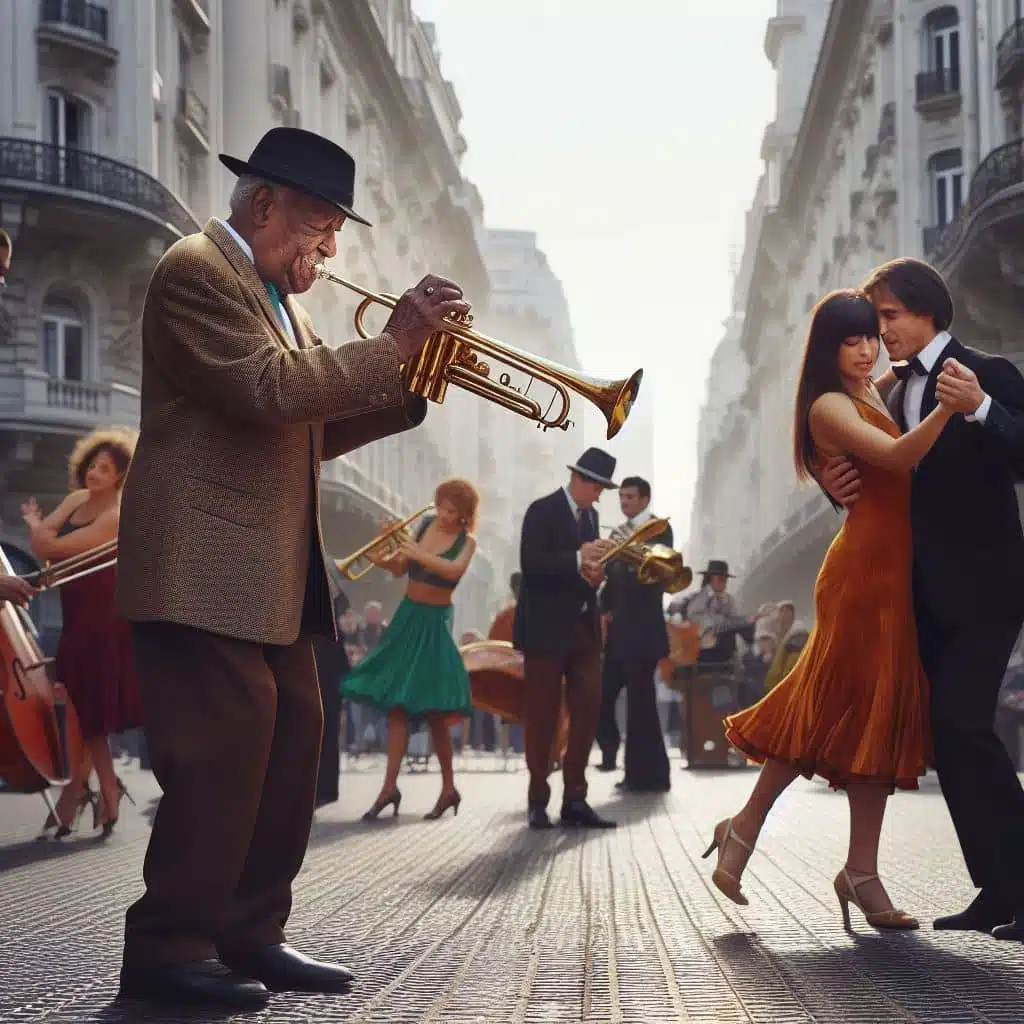
I’ve also created an image using artificial intelligence to illustrate the scene of Dizzy Gillespie playing trumpet with Fresedo’s orchestra.
