
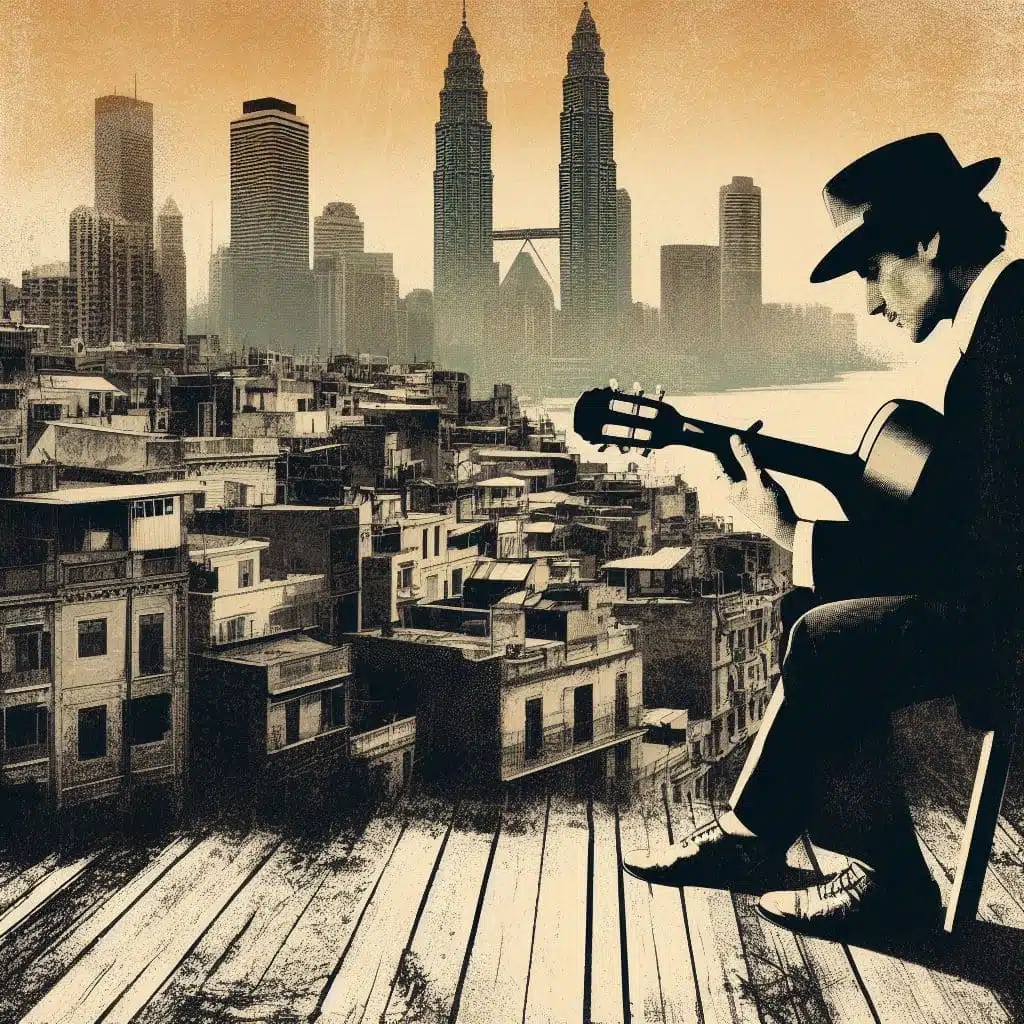
Libertango by Astor Piazzolla is one of the most famous and influential tango compositions of the 20th century. Written by the Argentine composer and bandoneonist, it marks a turning point in the creation of tango nuevo—a blend of traditional tango with jazz, classical, and rock influences. In this article, we explore the evolution of Libertango, from its original version to interpretations by Grace Jones, the Roberto Pugliese Trio, and Roberto Pugliese as a solo guitarist.
The Original Version: Libertango by Astor Piazzolla
Born in 1921 in Mar del Plata, Argentina, Piazzolla moved to New York at the age of four. There, he learned to play the bandoneon—a concertina essential to tango—and developed a deep appreciation for jazz and classical music, especially Bach. Upon returning to Argentina in 1937, he joined tango orchestras and studied composition under Alberto Ginastera, a leading Argentine composer.
Influenced by his eclectic background, Piazzolla began innovating tango with new harmonies and forms. He founded groups like Octeto Buenos Aires and Quinteto Nuevo Tango, composing works such as Adiós Nonino, Balada para un loco, and Fuga y misterio. Despite criticism from purists, he earned worldwide acclaim for his fresh approach.
Libertango was composed in 1974 during a stay in Italy. The name combines “libertad” (freedom) and “tango,” symbolizing a bold departure from tradition. Its catchy bandoneon melody, syncopated rhythm, and rich chromatic harmonies made it instantly recognizable. Piazzolla recorded it in Milan as part of the Libertango album, which also includes Meditango, Undertango, and Violentango.
The piece became a classic, covered by countless artists. Here’s Piazzolla’s original version:
The Reggae Version: Grace Jones
Grace Jones, a Jamaican singer and icon of pop culture, brought Libertango to a new audience in 1981 with I’ve Seen That Face Before (Libertango). She added English and French lyrics, creating a fusion of tango, reggae, and chanson. Produced by Chris Blackwell and Alex Sadkin, the track featured musicians like Sly & Robbie and Wally Badarou. Its hypnotic rhythm and Parisian monologue made it unique.
The song topped charts in Europe and appeared in films such as Frantic and Raw Deal. Jones also released versions in Spanish and Portuguese. Watch her performance here:
The Power Trio Version: Roberto Pugliese Trio
In 2000, the Roberto Pugliese Trio released a bold version of Libertango, starting with an original intro called Introne. The track appears on the album Tangos sin versos 7, produced by Mizapie Records in Italy. The arrangement blends ambient textures with rhythmic drive, featuring piano, guitar, and bass in a dynamic dialogue. The result is fresh and vibrant.
The Solo Guitar Version: Roberto Pugliese
Roberto Pugliese is also acclaimed as a solo guitarist. He has performed internationally and released albums with original compositions and tango arrangements. As a teacher and editor, he has published numerous guitar scores and taught in conservatories worldwide.
In 2019, Pugliese released a solo guitar version of Libertango, based on his own arrangement. Played on a classical guitar with nylon strings, it retains the soul of the original while exploring new colors through fingerstyle techniques, arpeggios, and percussive taps. The piece lasts around three minutes and is both lyrical and powerful.
Conclusion: The Legacy of Libertango by Astor Piazzolla
Libertango is more than a tango—it’s a statement of artistic freedom. From Piazzolla’s groundbreaking composition to reinterpretations by Grace Jones and Roberto Pugliese, it continues to inspire musicians and audiences across the world. Its adaptability proves the lasting genius of Piazzolla and the enduring power of tango.
