
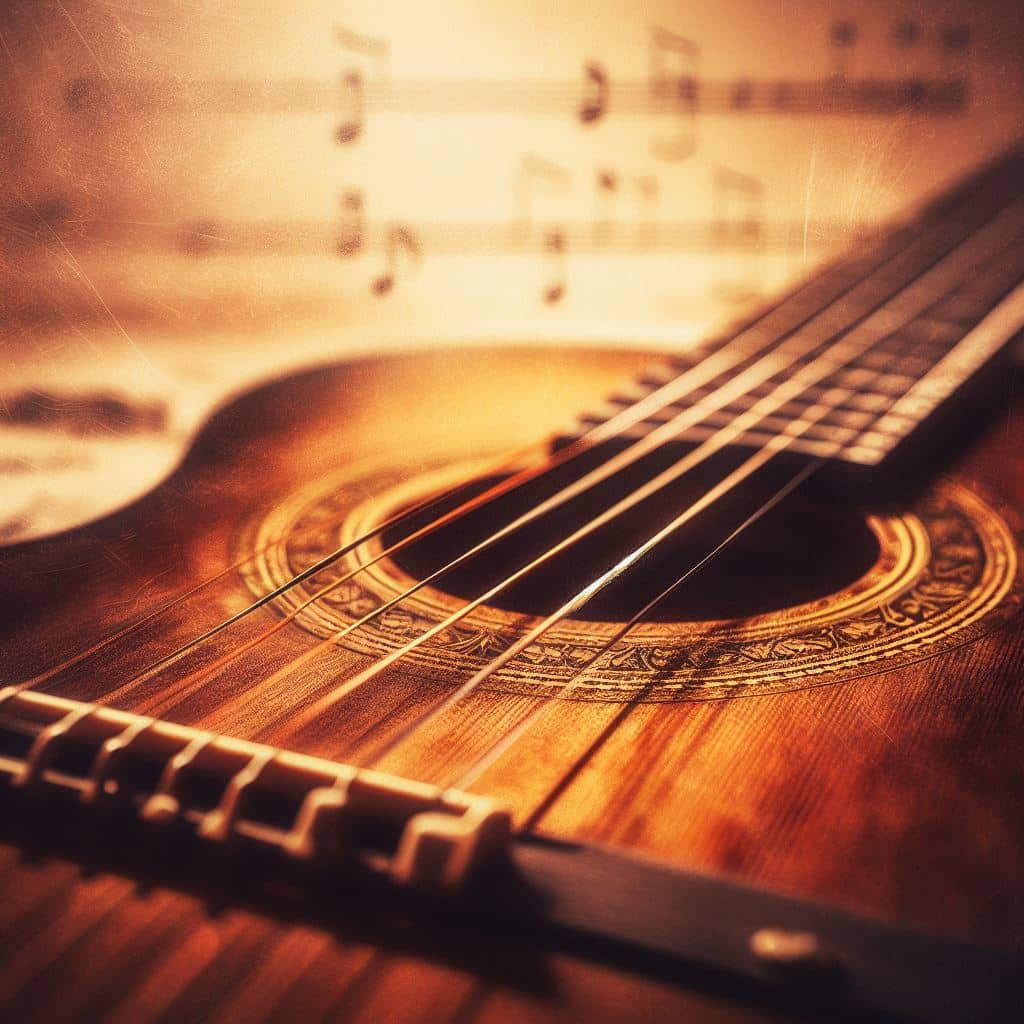
Six strings can carry a melody, a bass line and an answering voice at once. The classical guitar’s history helps explain why such a compact instrument became at home in the concert hall, beside a singer and within South American musical traditions.
How the familiar instrument took shape
The modern guitar emerged from a long history of related European plucked instruments. Renaissance and Baroque guitars often used courses—pairs of strings treated as one—while the six single strings familiar today became established around the turn of the nineteenth century.
In the nineteenth century, Spanish maker Antonio de Torres helped establish the proportions and construction associated with the modern concert guitar. He refined an existing tradition: fan bracing, the arrangement of light wooden supports beneath the soundboard, had earlier precedents.
A small wooden amplifier
A plucked string alone is quiet. Through the bridge, its vibration moves the soundboard, which works with the body and the air inside it to produce a fuller sound. The instrument’s materials, dimensions and construction influence that response, but the player’s touch remains decisive.
Modern classical guitars generally use nylon-family treble strings and wound bass strings. Compared with a steel-string instrument, the balance, feel and range of attack are different. Listen to how a guitarist can move from a rounded singing sound to a bright, incisive one simply by changing the point and manner of contact.
A South American voice
Across South America, the guitar became an instrument of accompaniment, social music and solo performance. It can mark a dance rhythm, answer a verse or suggest several musical parts without a second player.
The concert repertoire reflects that variety. Agustín Barrios’s music gives the instrument a richly idiomatic solo voice; Heitor Villa-Lobos explores its resonance and physical possibilities. In tango and Argentine folklore, arranging requires another kind of attention: how to keep a characteristic rhythm alive while the melody remains free to sing.
That is the conversation behind my work as a guitarist, arranger and composer. The aim is not to make the guitar imitate every detail of a larger ensemble. It is to discover which voices, accents and silences allow the piece to speak naturally through six strings.
Watch and listen


Explore the music: Guitar scores · Guitar albums
Keep reading: Bartók on guitar · Tango · Andean instruments
Sources and further reading: The Metropolitan Museum of Art: The Spanish Guitar.