
BUENOS AIRES · HISTORY, GUITAR & CULTURAL MEMORY
A vanished ballroom, a waltz that survived, and about a month of work to imagine them together again.
By Roberto Pugliese, with Jenny (GPT). Historical research and the making of the 4K music video.
Leer en españolWatch the performanceThe history of Pabellón de las Rosas
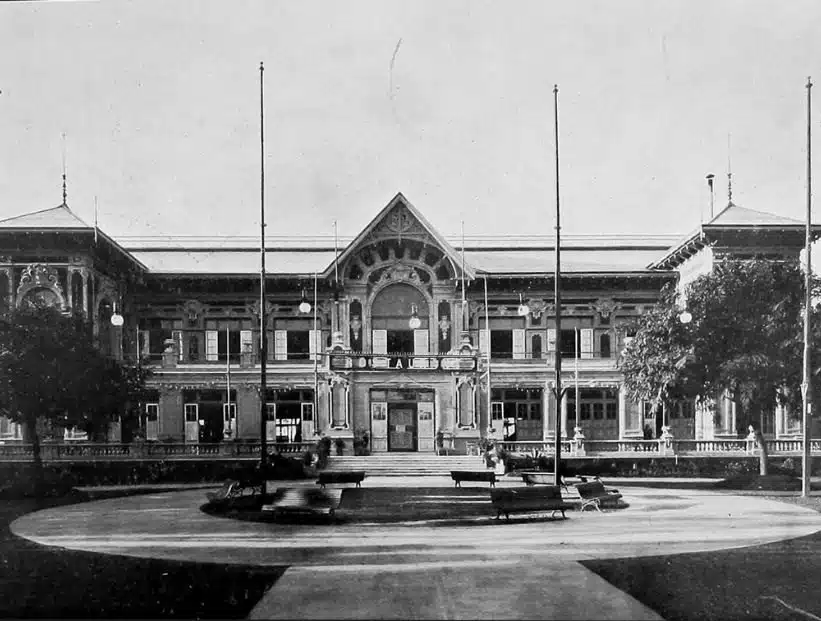
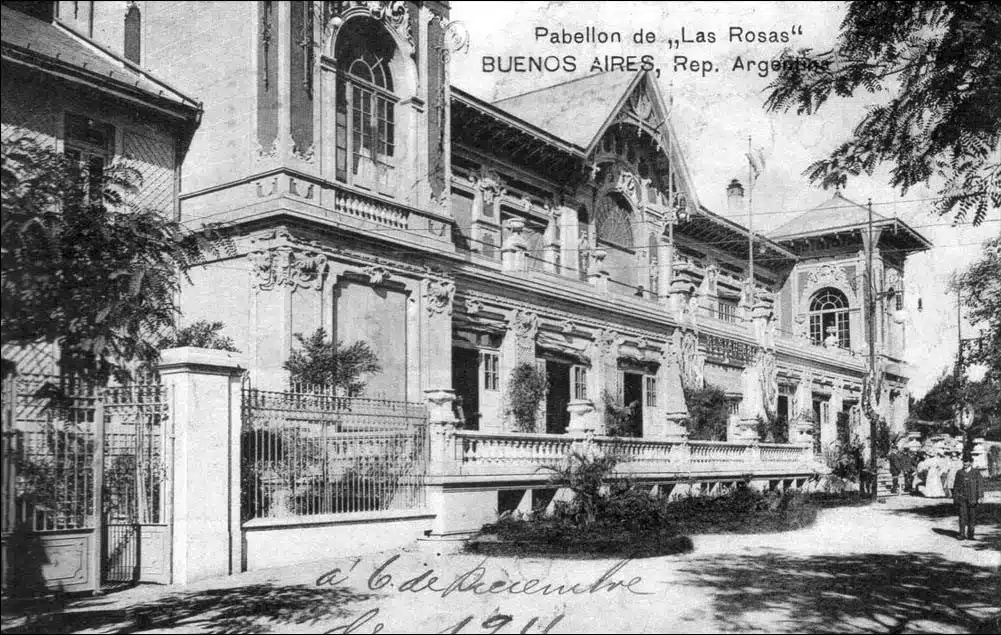
On the old Avenida Alvear at Tagle—today Avenida del Libertador—Buenos Aires once had a meeting place called Pabellón de las Rosas. Its name brings together dancing, entertainment and the social life of a changing city. The venue stood in Recoleta, close to Palermo, on the site now associated with Plaza República de Chile. [1], [7]
Origins: a meeting place at the turn of the century
Its origins belong to turn-of-the-century Buenos Aires. We have not verified a document establishing the exact opening day or identifying the architect. Benedetti describes it operating in the early twentieth century: a symmetrical building approached through gardens and a roundabout, offering dining, dancing and skating. [2]
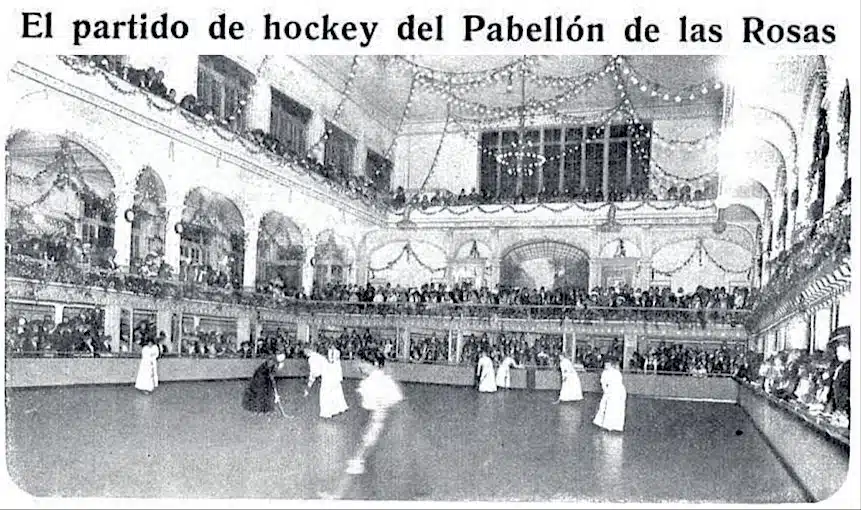
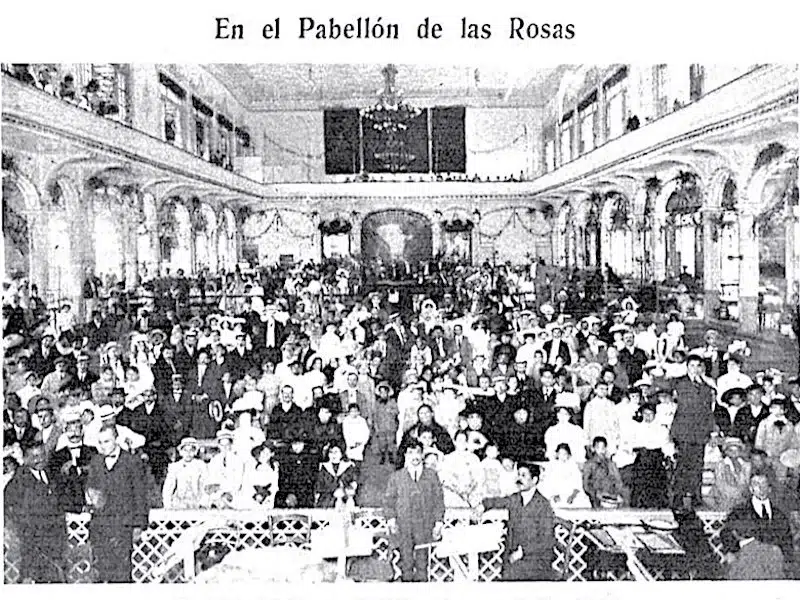
The exterior and interior photographs show two levels. The large hall, arcades and upper gallery help explain how the building accommodated such different activities. That adaptability, visible in the photographs themselves, became important both to its story and to our reconstruction.
Its heyday: entertainment, sport and society
The Pabellón combined social gatherings and charity events with sport. Marzoratti describes the popularity of roller skating and hockey, including women’s matches. Its grounds also hosted balloon ascents and a football pitch. The ballroom belonged to a much broader world of recreation. [4]
During the 1910 centenary celebrations, Infanta Isabel of Spain visited the gardens for an equestrian competition. Alicia Braghini’s account, reported by Germán Wille, also recalls theatre performances and spring and carnival dances. The venue was part of the city’s public and festive life. [3]
Activity continued through the 1920s. Jorge Tartarini recalls thousands visiting annual motor exhibitions there. A ballroom hosting industrial novelties offers another perspective on the building: it could serve dancing one day and a major exhibition another. [6]
Tango and the medical students’ balls
Around 1910 the Pabellón had its own band, directed by Gaetano D’Alo. Héctor Lorenzo Lucci places it among the centenary’s ensembles, in a musical world where tangos, waltzes, polkas and other genres coexisted. That variety makes a waltz a particularly fitting way to approach the venue today. [14]
Medical students organised the celebrated Bailes del Internado, commissioning new tangos for their festivities. The venues matter: Cespi and García Blaya place the first ball, in 1914, at the Palais de Glace, followed by events at the Pabellón. Titles such as El internado, El bisturí and Anatomía preserve this connection with hospital life. Canaro recalled macabre practical jokes; those accounts concern particular student parties, not every tango gathering. [5]
Neighbours, morality and fights: what we could verify
There is a reference to complaints from neighbours: Marzoratti reports objections to the Pabellón’s tango evenings on moral grounds. This is a retrospective historical account; we did not locate the original municipal complaint file during this research. [4]
Another distinction is essential. The La Nación article discusses requests for closure, nightlife and violent confrontations, but that passage explicitly concerns the neighbouring Armenonville. Those incidents should not be transferred to Pabellón de las Rosas or presented as the reason for its demolition. [3]
Decline, closure and demolition in 1929
Modern accounts describe a building that gradually lost prominence and was deteriorating by the late 1920s. That summary helps explain its decline, but is not a substitute for a contemporary condition report or demolition order. [7]
The end is better established: Benedetti places the last dances at the 1929 carnival, closure at the start of Lent and demolition by Easter. The National Academy of Medicine’s account also gives 1929. We found insufficient evidence to make neighbours’ complaints the sole cause of that outcome. [1], [2]
The building vanished, but photographs, memories and music remained. That became this project’s starting point: approaching a lost space through a piece we can still play.
The waltz Pabellón de las Rosas and its authors
The music was written by José Felipetti (1873–1941), a bandoneon player, composer, bandleader and publisher known as Natalín. Oscar Zucchi places him among the instrument’s pioneers and traces the waltz’s enduring repertoire history: Eduardo Arolas recorded it in 1913, followed by interpretations by Canaro, Firpo and D’Arienzo. The music kept the ballroom’s name alive after the building disappeared. [8]

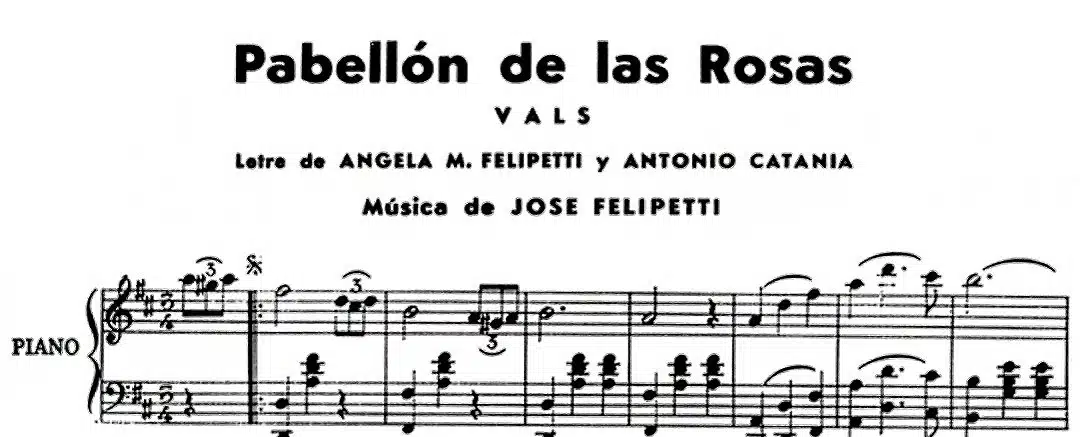
The sung version has lyrics by Ángela María Felipetti and Antonio Catania, credited in the score and recording information consulted. This performance is instrumental. I made the original arrangement for solo guitar and performed it myself. The composer’s work and this particular arrangement have separate credits. [9], [10]
Our month of work: imagining the ballroom again
I wanted to use music as an exercise in cultural memory: what might it feel like to walk into that ballroom today, sit down with a guitar and play? We spent about a month researching, modelling, generating images, filming and editing. What follows documents our own process, including the attempts that did not work.
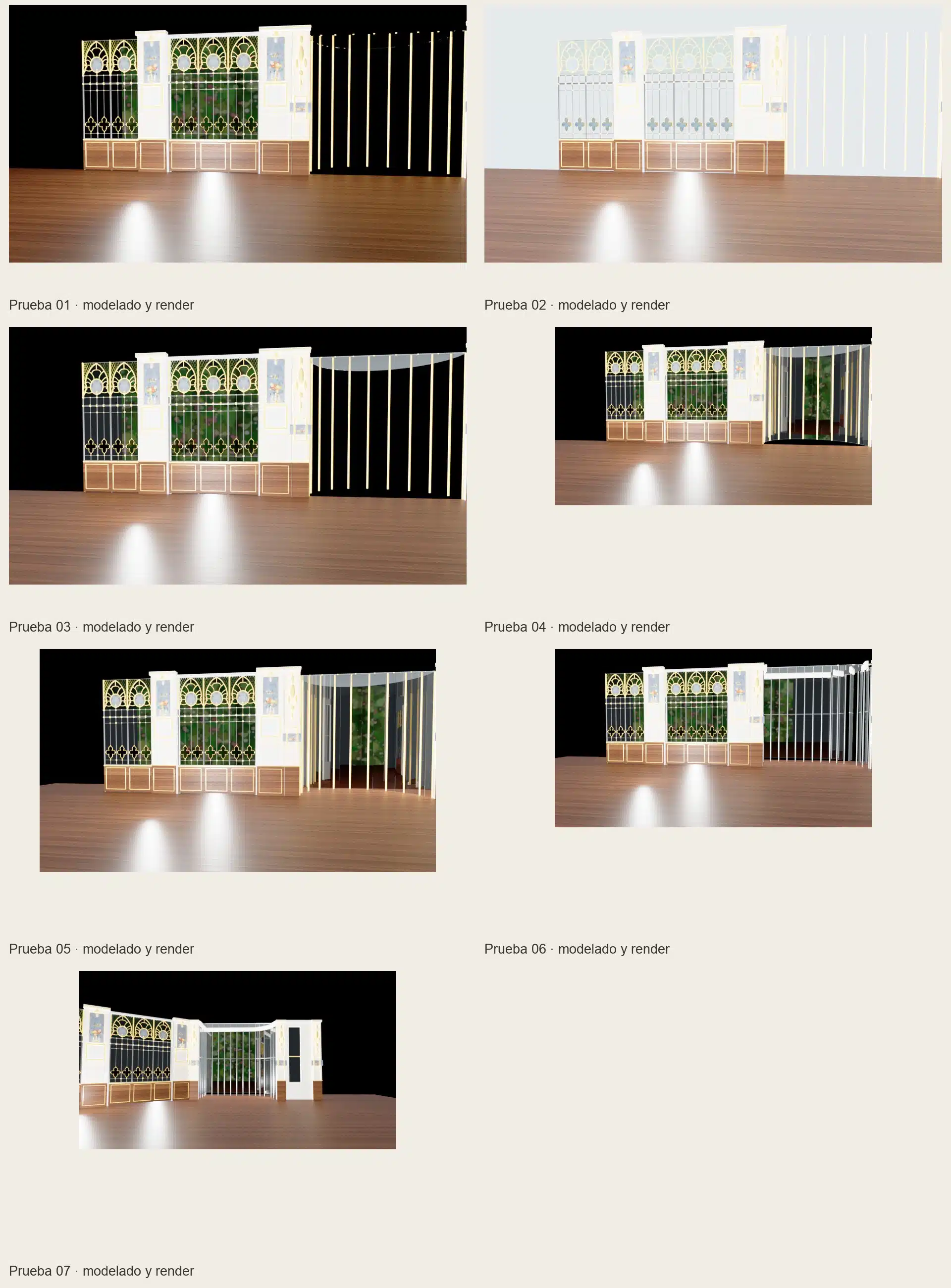
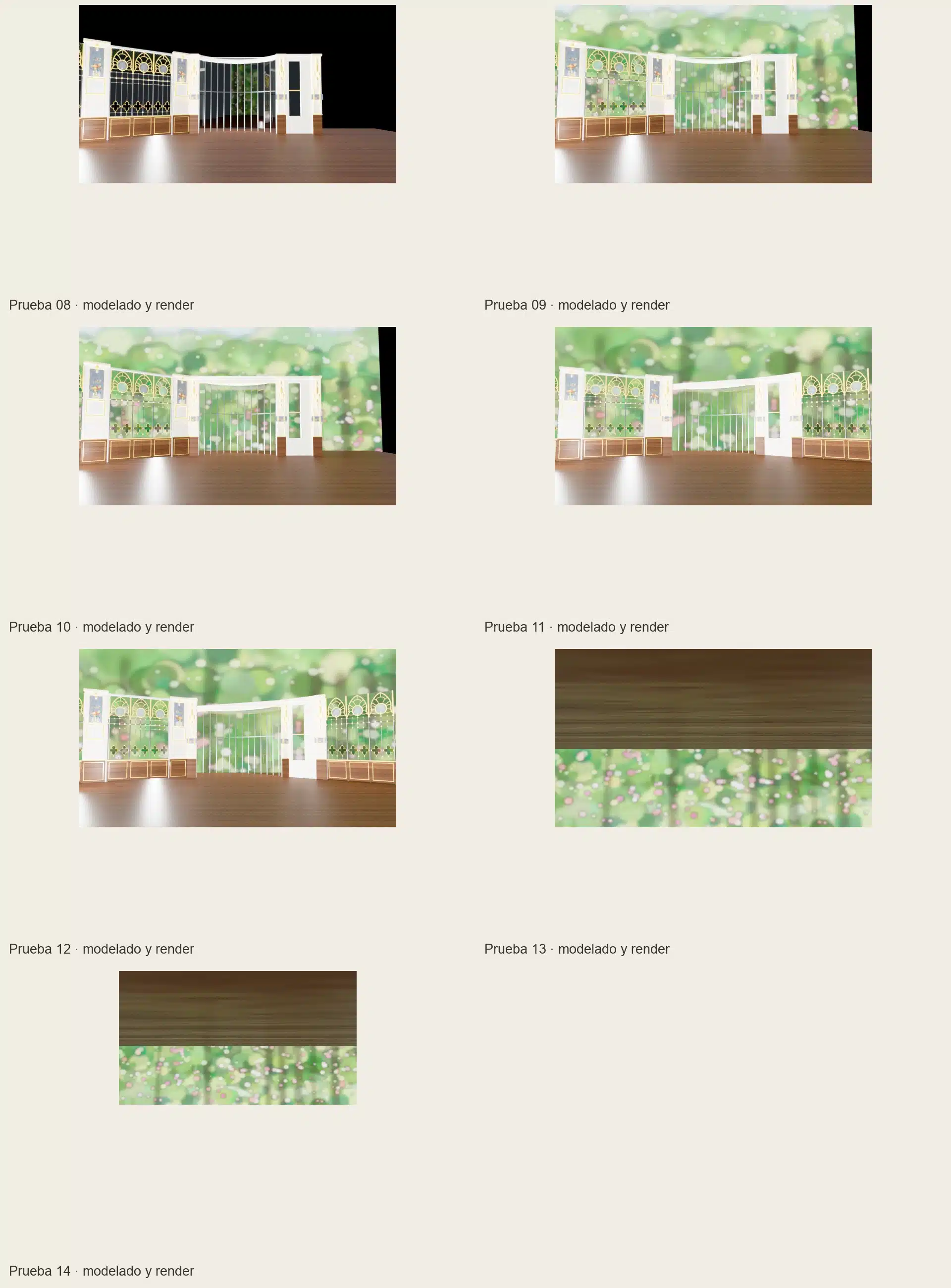
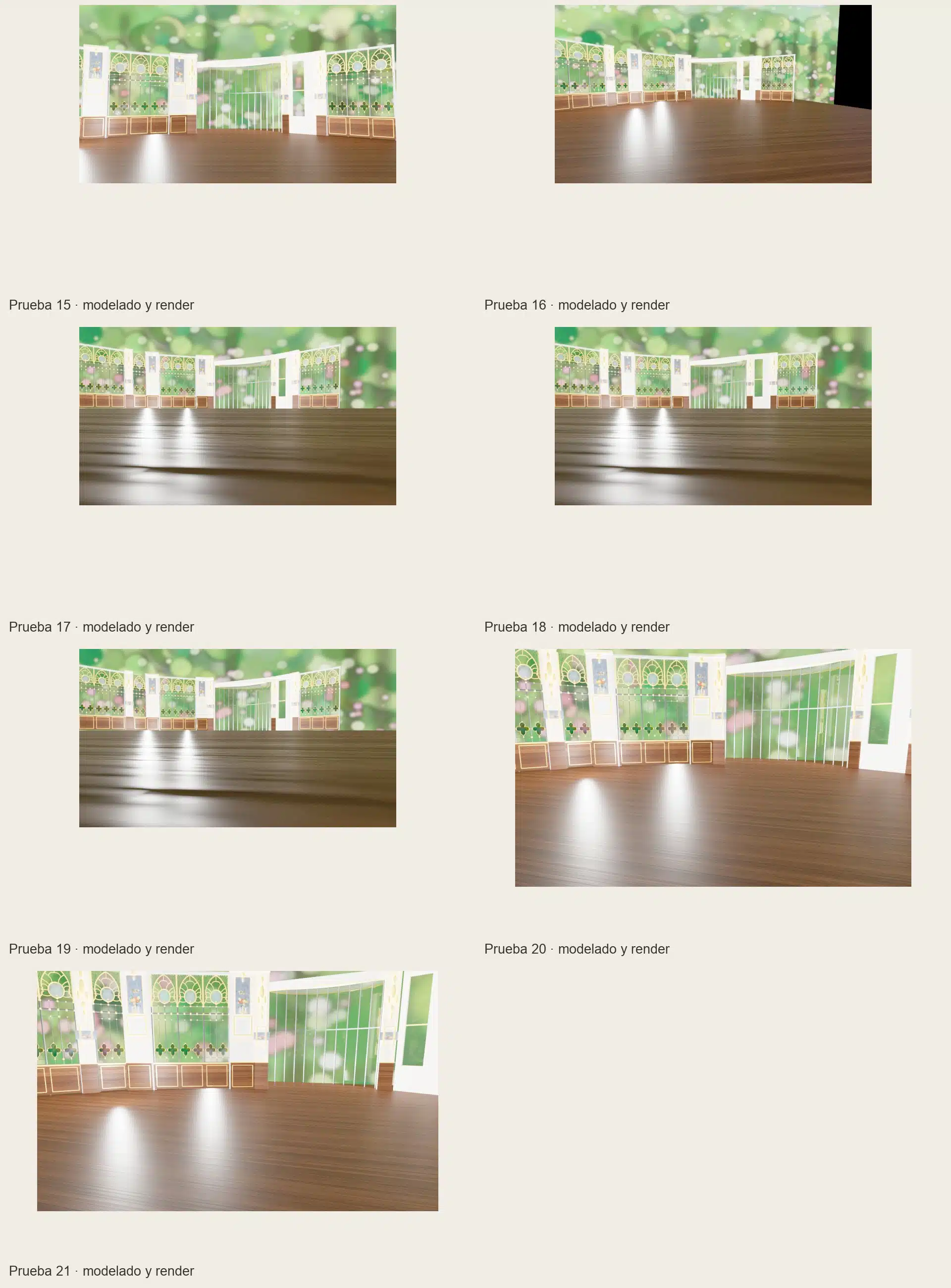
1. My first 3D models and the search for the windows
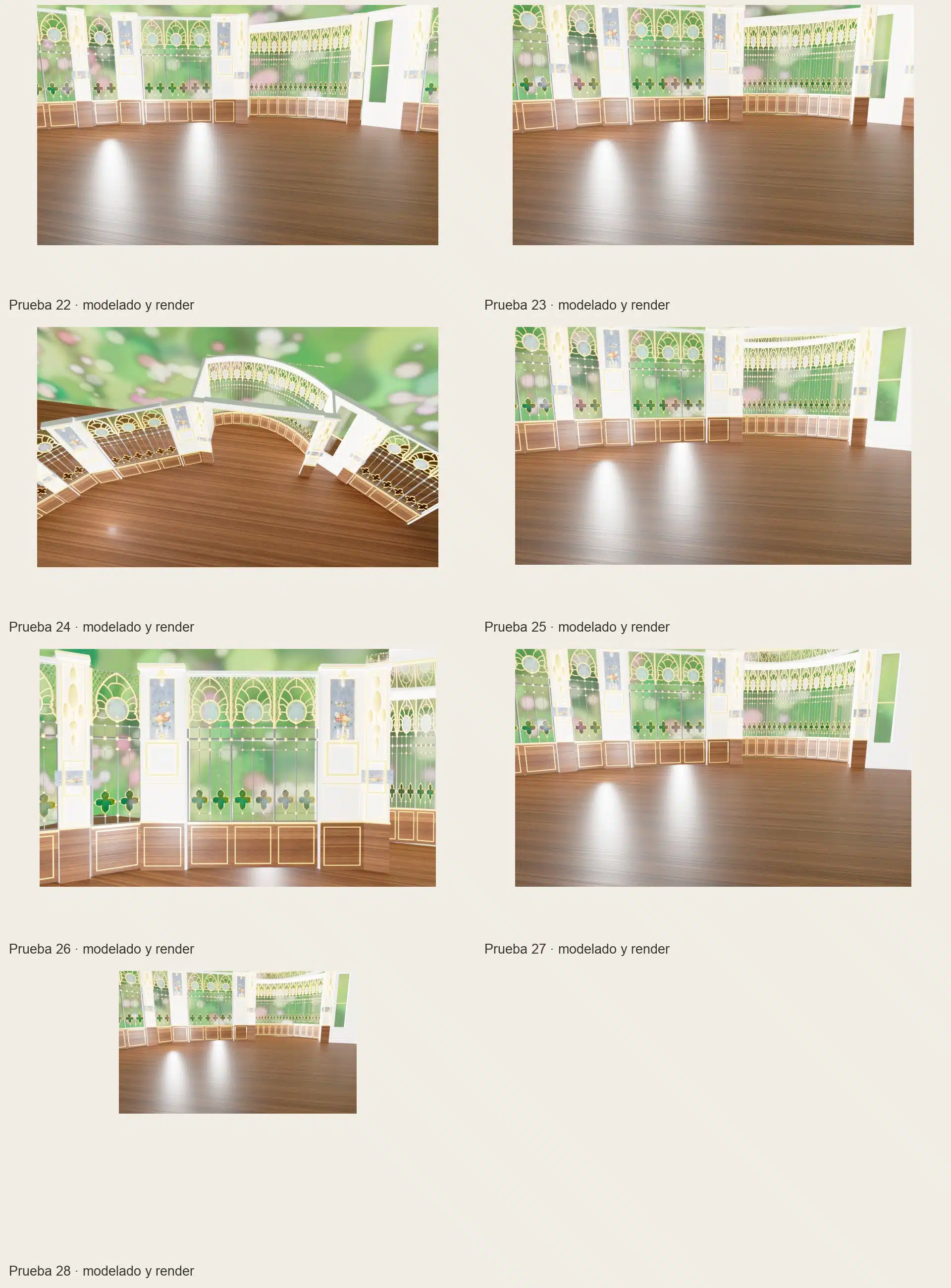
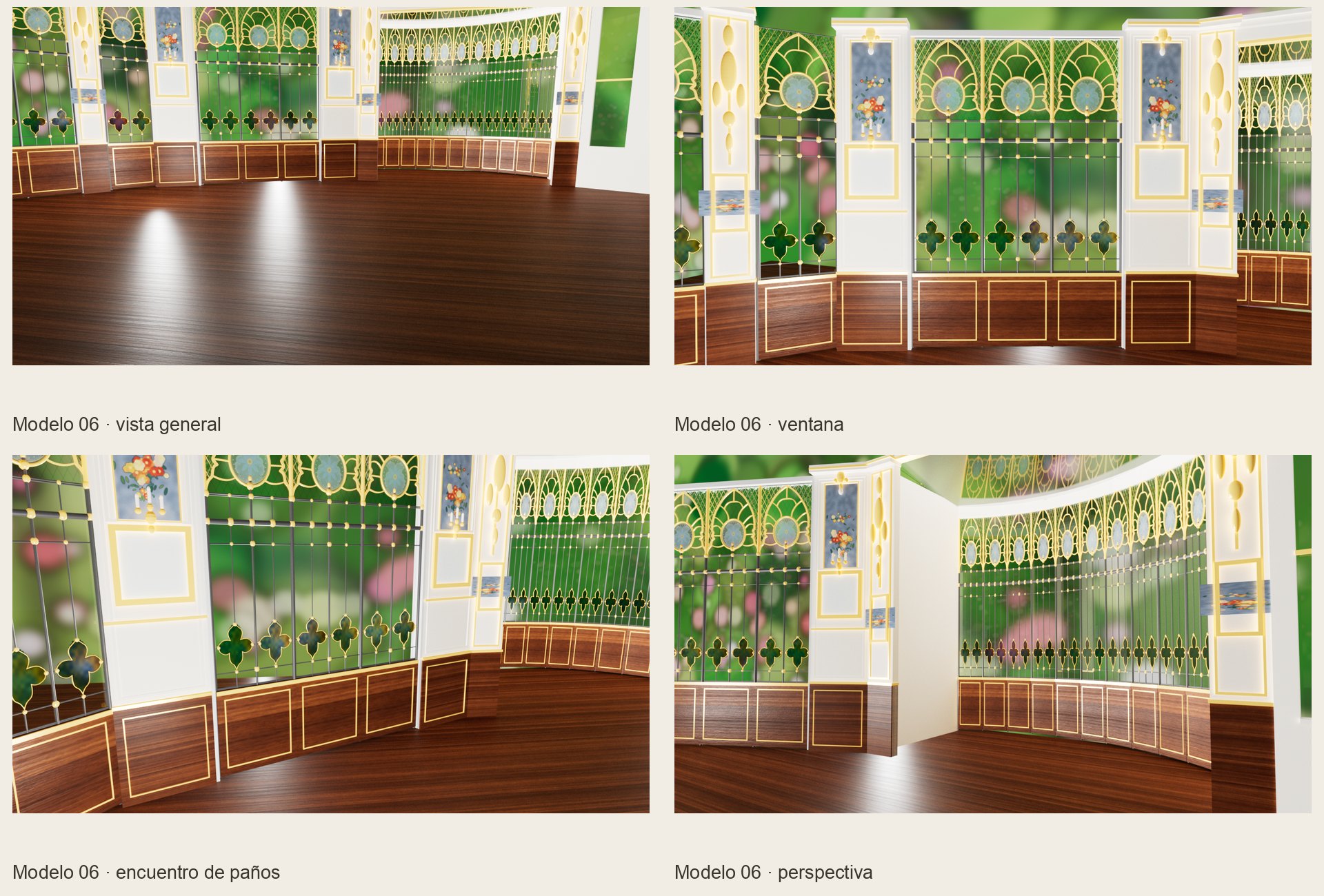
I began building three-dimensional models and trying to copy the windows from the photographs we had. I tested proportions, repeating modules, heights, mouldings and room layouts. An image could look beautiful while still getting the architecture wrong. These contact sheets bring together the 28 numbered trials we retained, along with model details. They are working renders, not historical photographs.
2. Jenny, GPT and images that seemed to solve everything
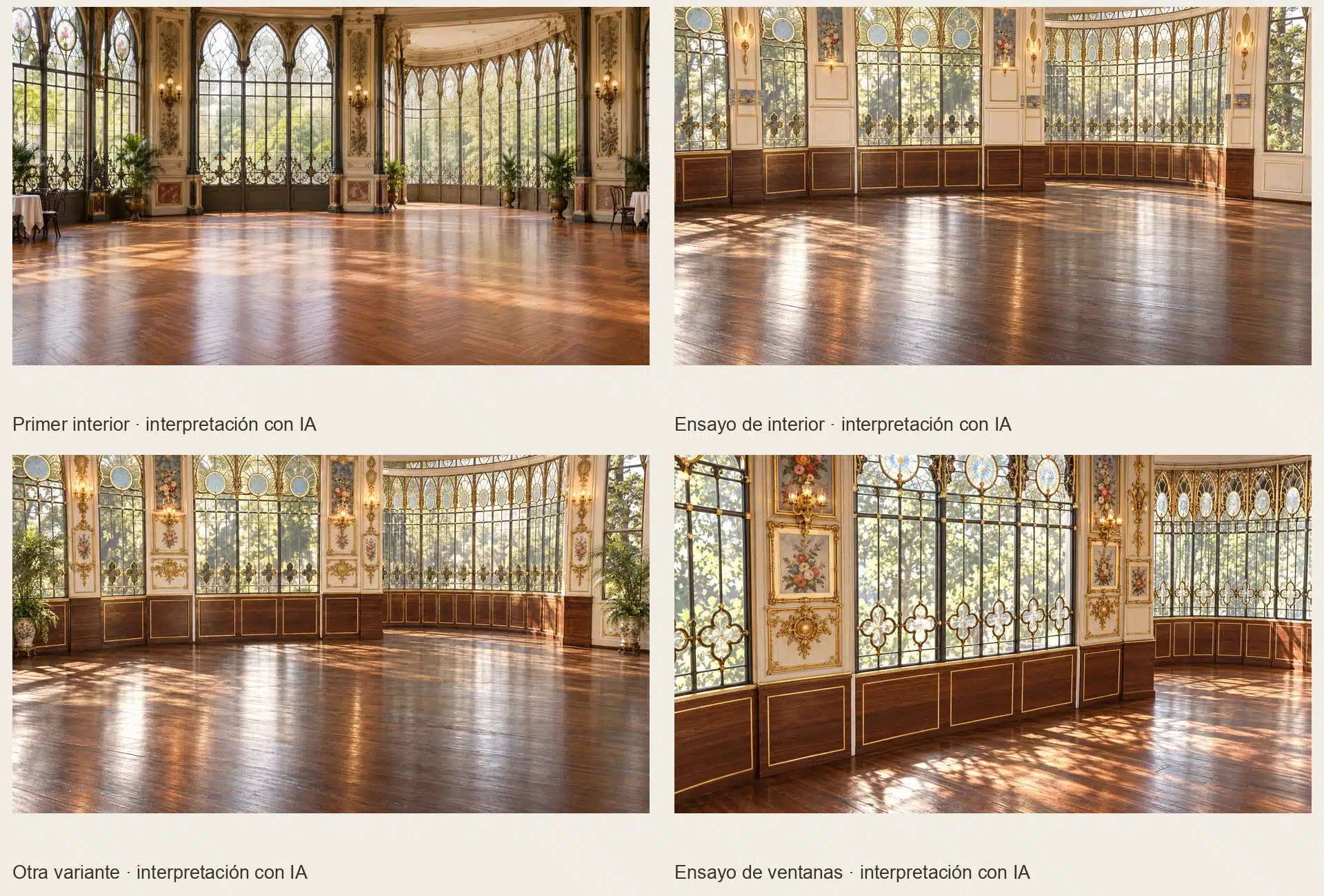
I asked Jenny—the GPT assistant I work with—to help interpret the photographs and create images of the ballroom. Our exchange was practical: look, compare, point out an incorrect window, correct a gallery and try again. Image tools helped explore possibilities and produce backgrounds; every result still needed my review.
Some generated interiors were convincing; others moved too far from the building. We also confused visual clarity with historical certainty. A recreation can fill in a photograph’s blurry areas, but those new details do not become documentary evidence simply because they look sharp.
3. The banquet photograph and the mistake that sent us back
We found a photograph of men dining in a room where the large windows could finally be seen clearly. It seemed to answer weeks of uncertainty. We studied the windows, interpreted materials and built a first interior around it. But the same image appeared under conflicting descriptions—a warning we should have taken more seriously.
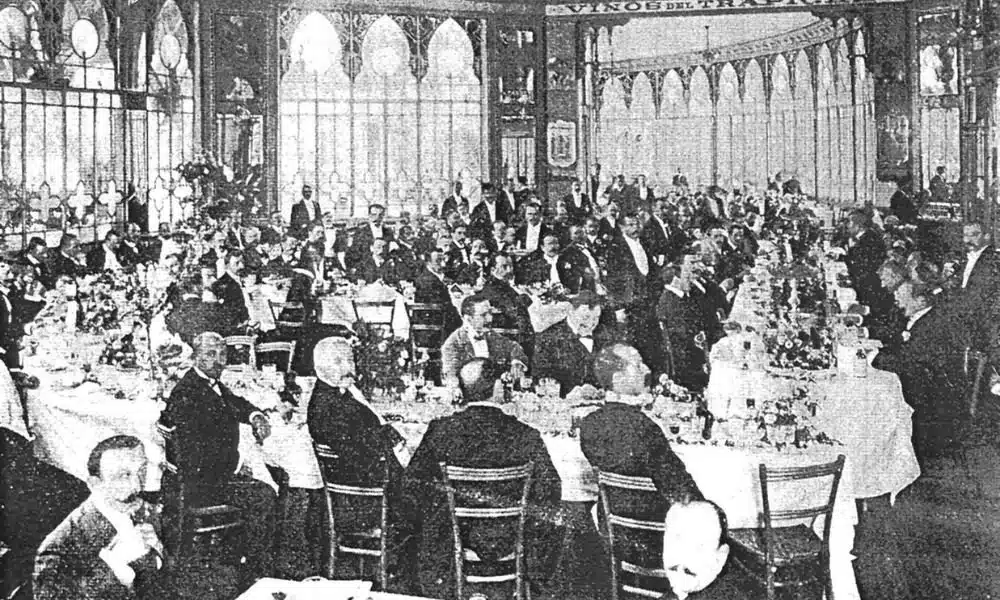
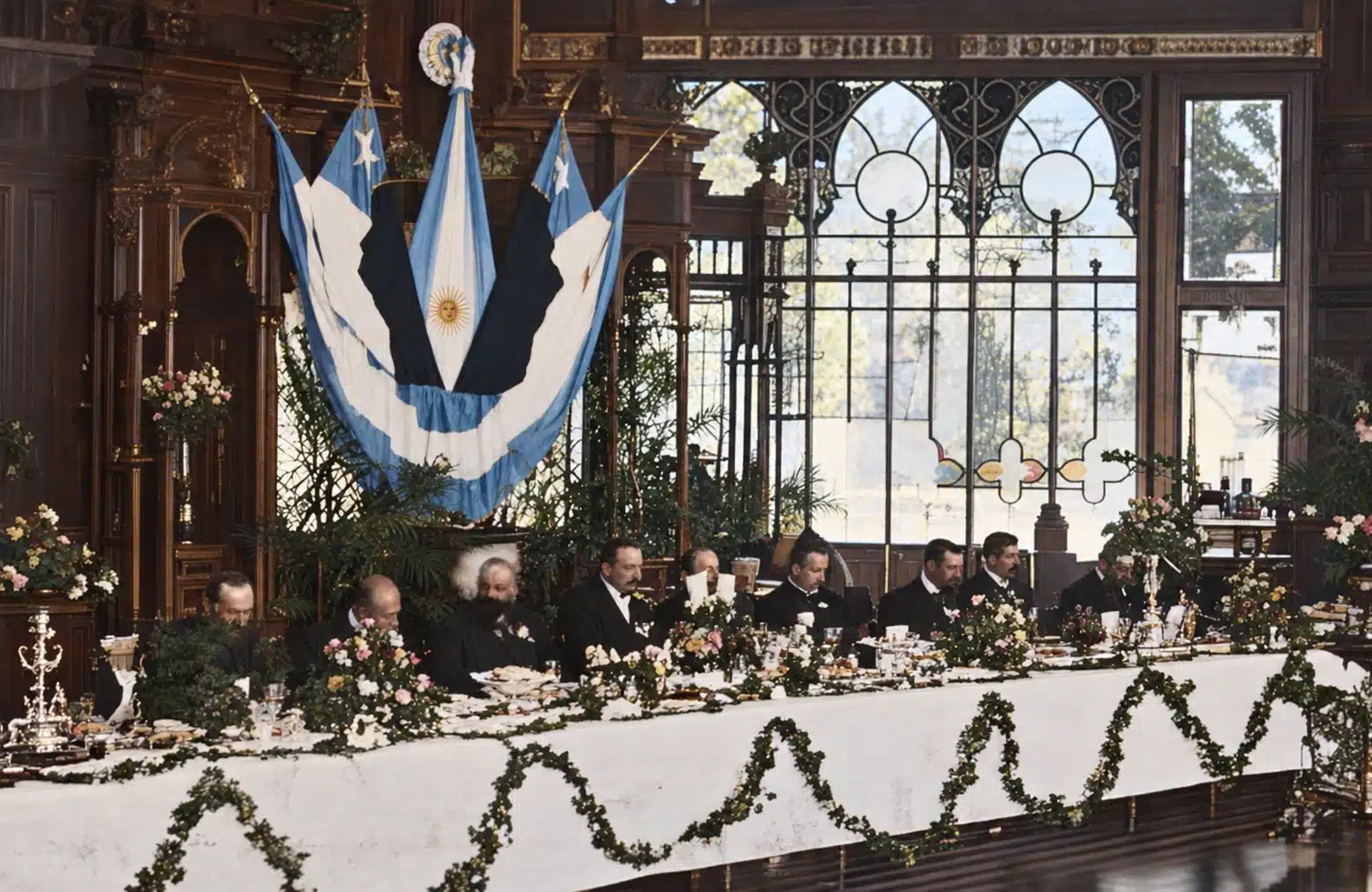
The decisive evidence came from Sucesos in 1903. Another photograph of the same interior identifies a banquet for Chilean officers at Pabellón de los Lagos. Its window architecture matched. These were two different buildings; repetition across websites had not made the caption reliable. [11]
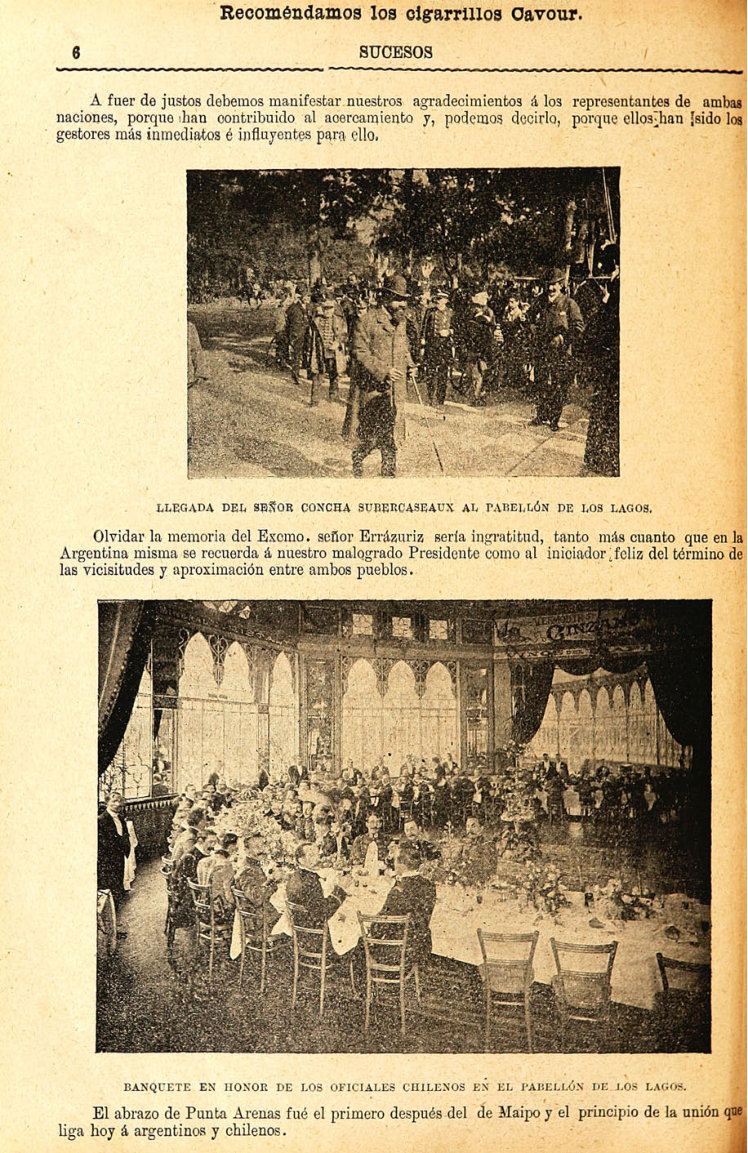
Jenny had accepted the identification too quickly, and we have kept that mistake in the story. The musical performance was already there; the setting had to change throughout both camera versions. We returned to photographs of the rectangular hall with arcades and an upper gallery, including the image headed En el Pabellón de las Rosas.
We had to make it again. So we did. Because we are unstoppable.
4. Real guitar: one performance, two cameras
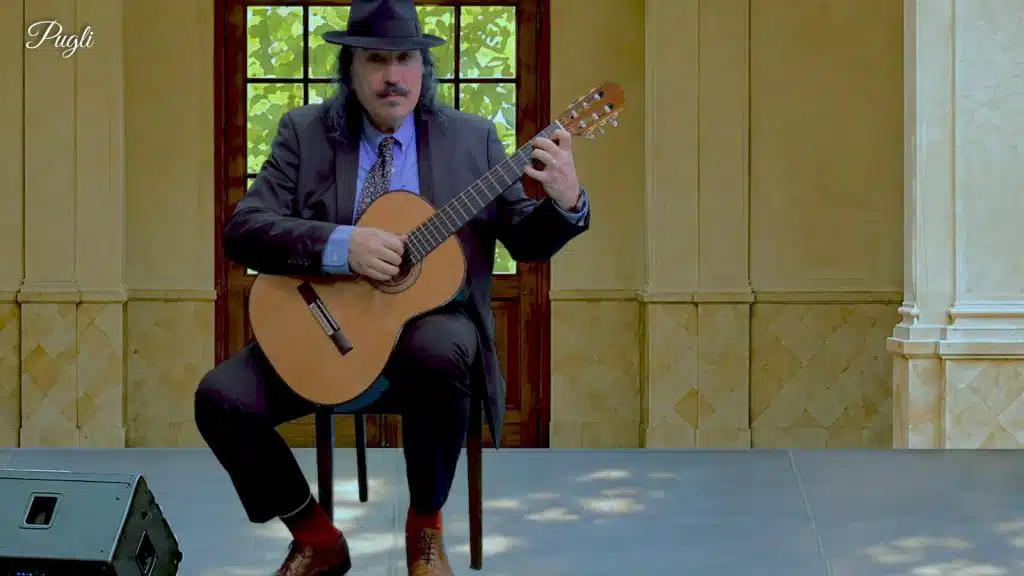
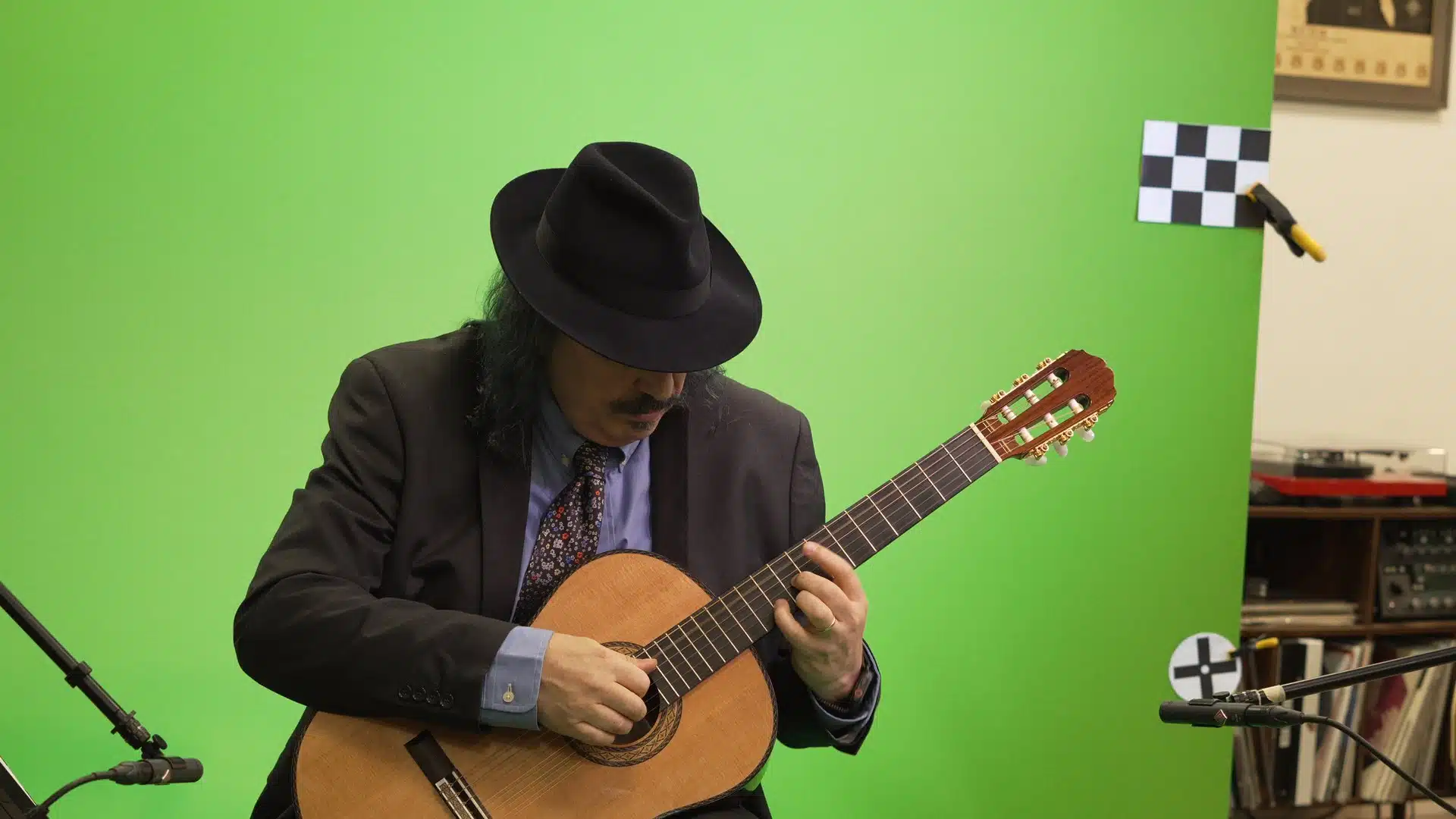
I recorded my arrangement on a Takamine N37, using Neumann microphones, a Focusrite interface and Cubase. What you hear is a real solo-guitar performance. Building the visual environment neither generates nor replaces that playing.
We filmed with two Sony cameras: the FX30 for V1 and the FX2 for V2. A dolly supplied camera movement, while a green screen let us separate my figure from the studio. The challenge was making two different views belong to one room, with a consistent stage, believable scale and a shared direction of light.
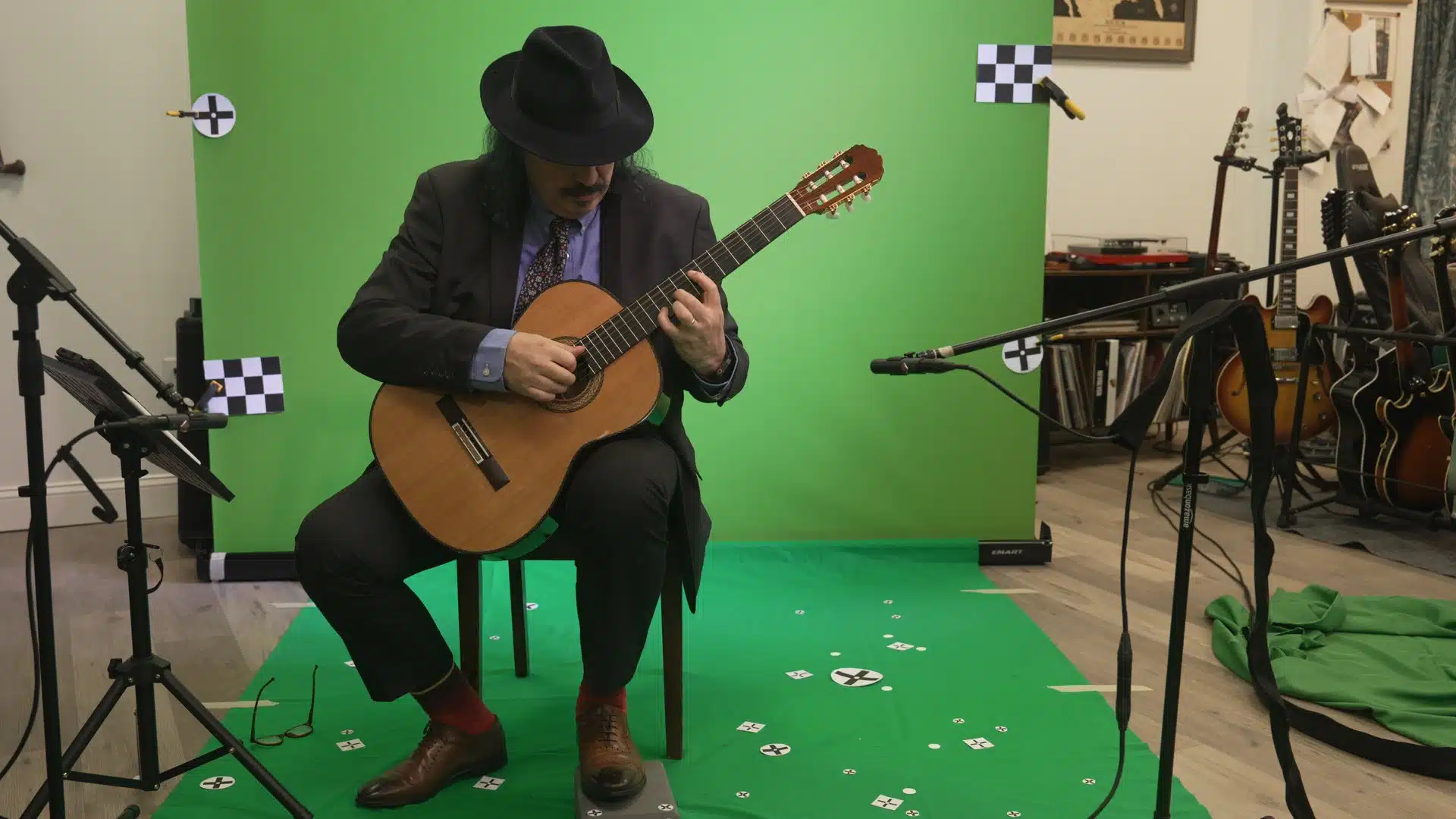
5. Tracking, masks, shadows and a chair that had to touch the floor
Camera tracking had to keep the floor and stage attached to the dolly movement. A convincing grid on one frame was not enough: the whole move needed checking. We encountered wobble, masks crossing the picture, visible tracking markers, green areas between strings and around the headstock, and edges that required another pass.
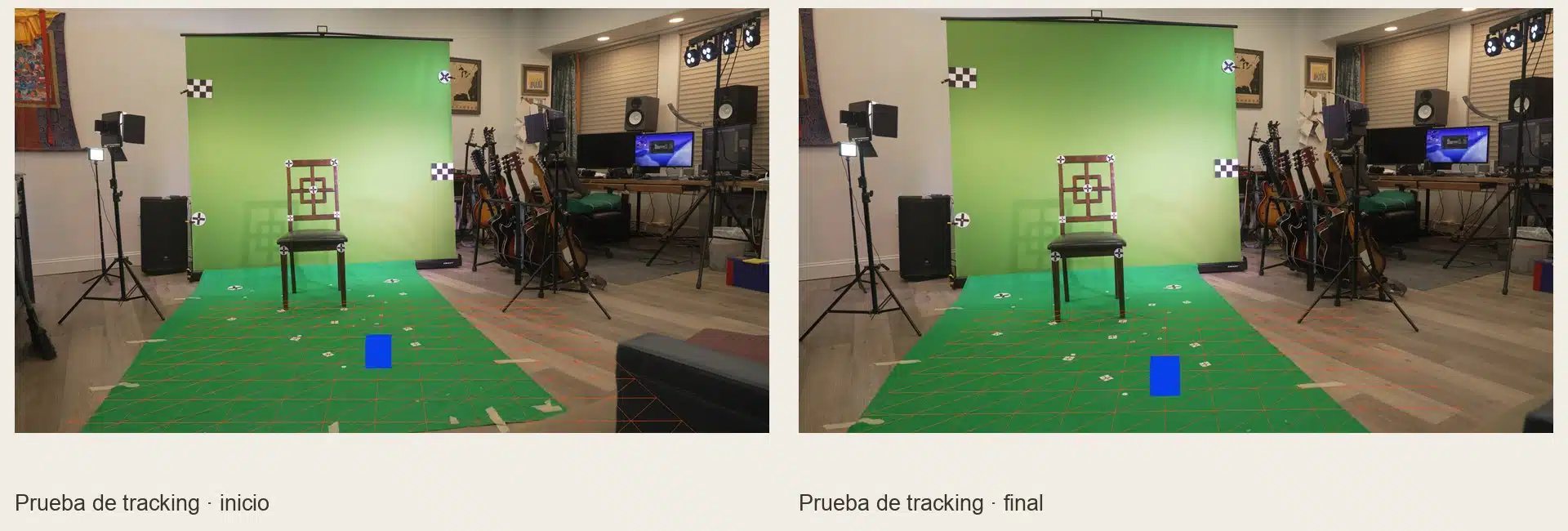
There was also a poorly cut speaker tripod, a leg that seemed to float, and a shadow that reappeared beside the footrest. We revised the staging and used a floor monitor. We treated contact shadows and cast shadows separately, checked the chair, steps and feet, and corrected shadows left behind when an object moved. A misplaced shadow could break the illusion even against a beautiful background.
We worked in DaVinci Resolve and Fusion, then in Final Cut Pro. Magnetic Mask helped isolate the body and chair; chroma key handled delicate areas such as hair and the guitar’s gaps. We also re-exported stabilised material from Catalyst, simplified heavy compositions and corrected colour differences. The final edit returned to DaVinci to bring the cameras, introduction, audio and ending together.
6. One building, two viewpoints
The second camera could not show a different building. Some generated side views changed doors, galleries or glazing, and we rejected them. We went back to placing the original image, corrected its framing and only then worked on background detail in 4K. I also asked for a sharp wall so that blur could be adjusted in the editor instead of being baked into the image.
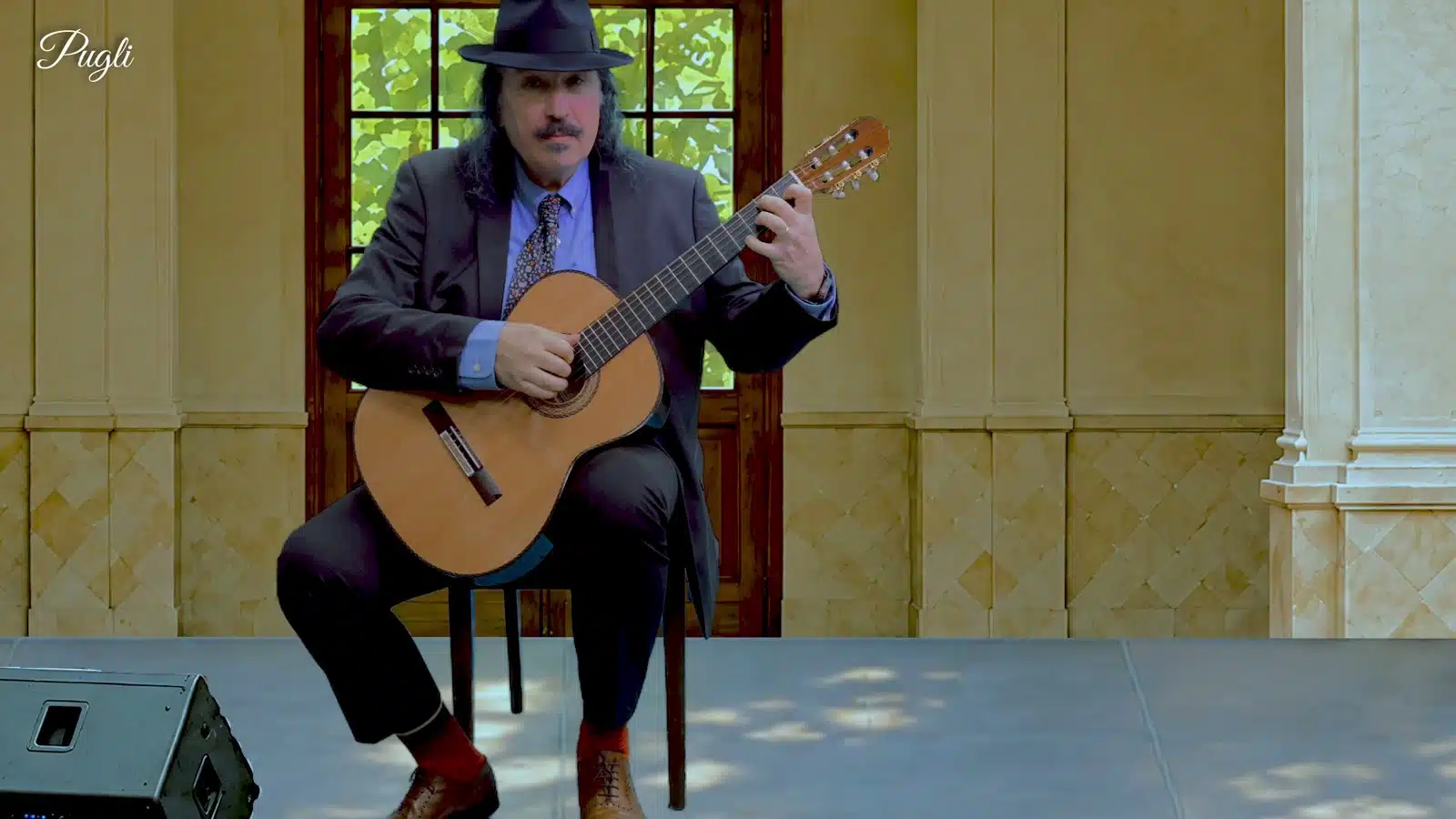
7. The entrance and the milonga revealed at the end
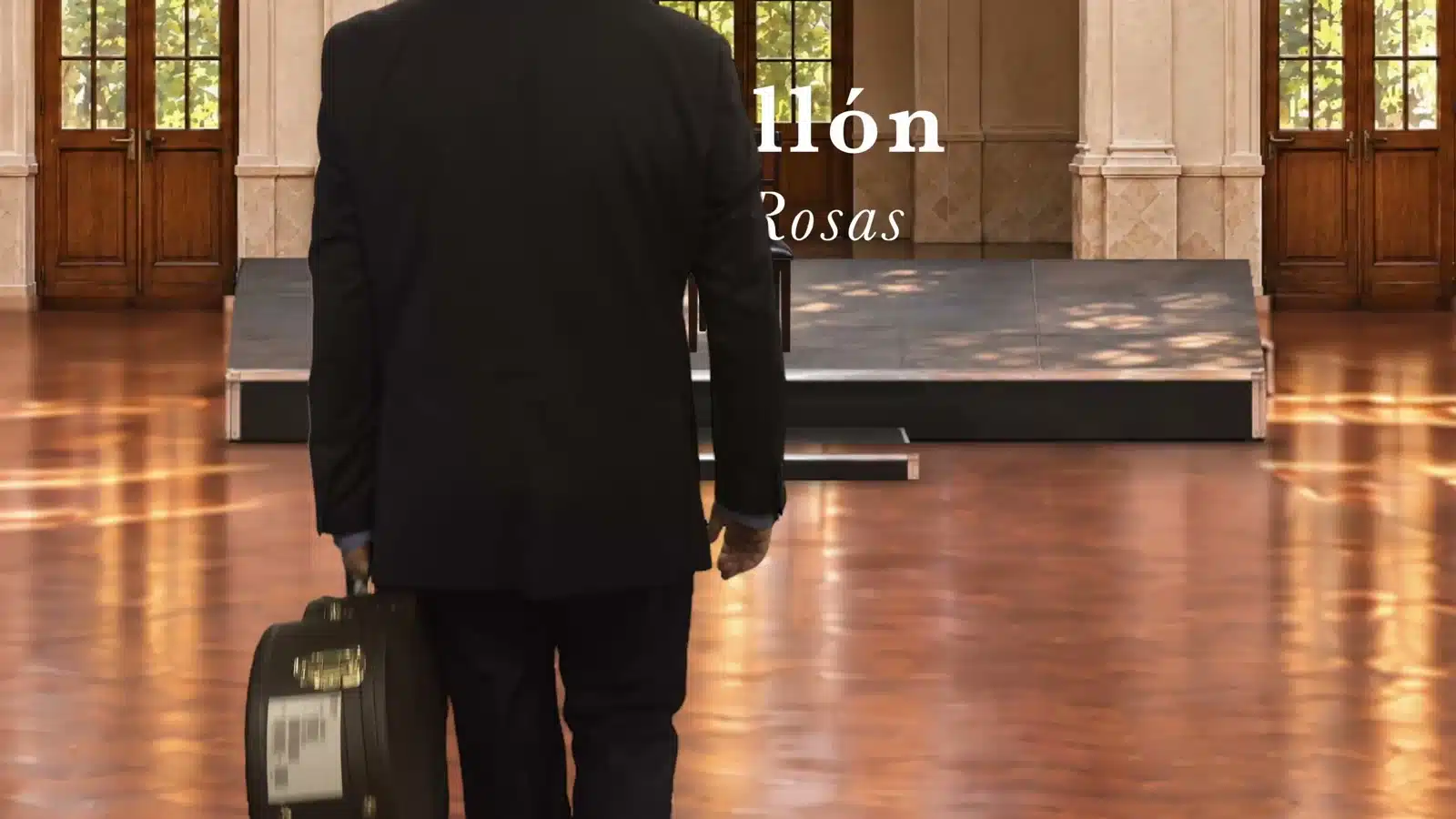
The introduction begins with historical photographs animated using Runway: an attempt to imagine how it might feel to visit the place if it still stood. Added people and movement are recreations; these animated images are not recovered documentary films. I then walk into the empty ballroom and the music takes centre stage.
The ending changed our original idea of an empty room. The shot starts close to the guitarist; as the camera retreats, it reveals tables and a living milonga. The couples finish dancing, turn towards the stage and applaud. The audience and its movement were made with generative tools and compositing; I continue playing in my real footage at the far end of the scene.
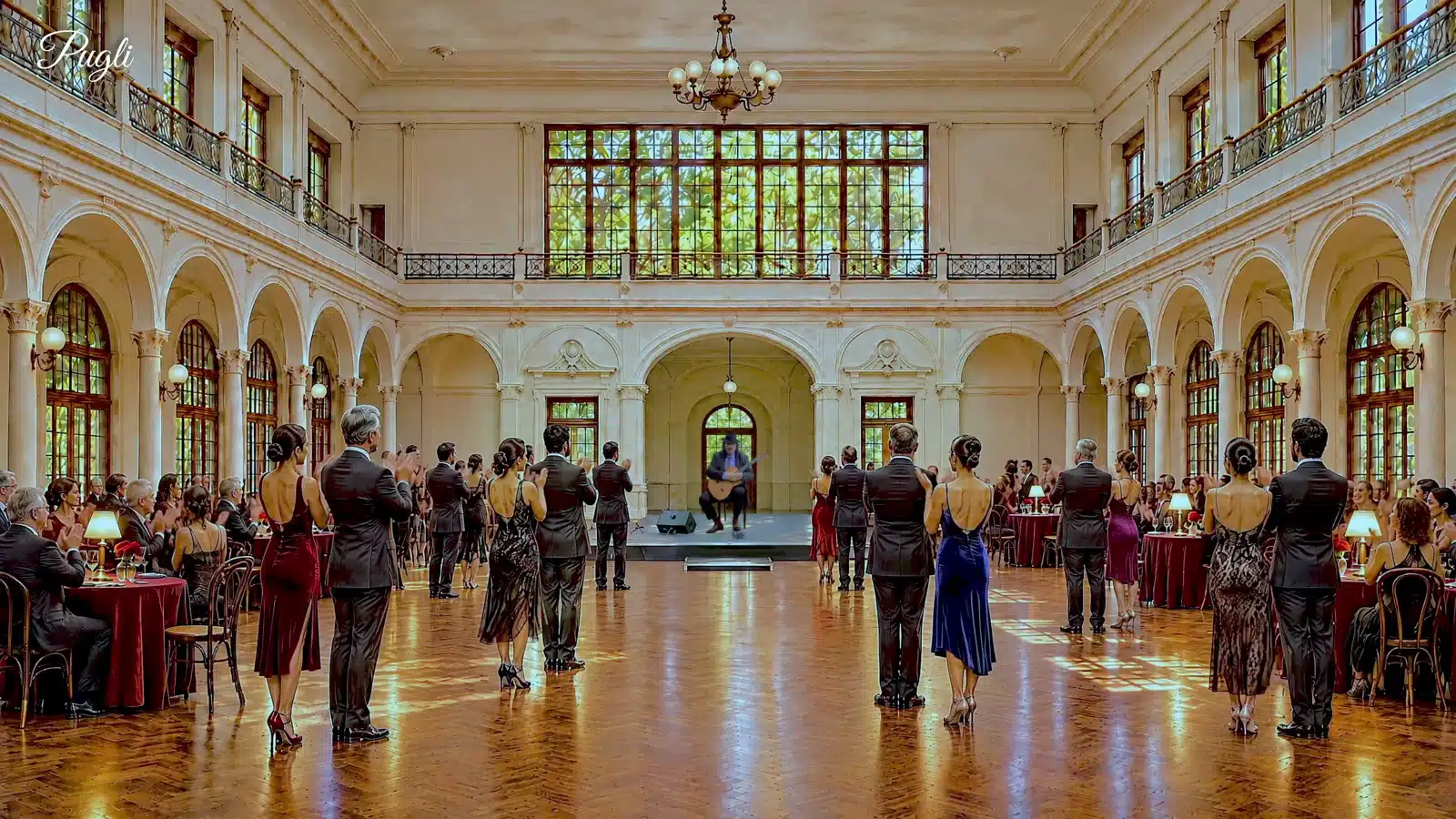
The finished video carries traces of everything that happened: research, patience, mistakes, debates over framing, and music that held the project together while its scenery changed. Cultural recovery can begin this way: by listening again, and being honest about how we imagined what we could no longer visit.
Watch Pabellón de las Rosas in 4K
José Felipetti’s waltz, arranged and performed for solo guitar by Roberto Pugliese.
Watch on YouTubeSubscribe to my channel
Credits
Music: José Felipetti. Lyrics of the sung version: Ángela María Felipetti and Antonio Catania. Solo-guitar arrangement, performance and artistic direction: Roberto Pugliese. Visual collaboration: Jenny (GPT), with image-generation and Runway tools. Recording: Takamine N37, Neumann, Focusrite and Cubase. Cameras: Sony FX30 and FX2. Compositing and editing: DaVinci Resolve/Fusion and Final Cut Pro.
Back to The Eclectic Guitar concert and readings in English · The history of tango · My tango guitar albums
Sources and image notes
The historical section draws on the sources below; the production account documents our own work. Where a primary record could not be found, uncertainty is stated. Sources checked on 11 November 2026.
- Academia Nacional de Medicina, Boletín 2018-3, pp. 90–91 (PDF pp. 91–92).
- Héctor Ángel Benedetti, «El Pabellón de las Rosas», El Sextante de Hevelius, 7/5/2010.
- Germán Wille, La Nación, 17/5/2024. Entrevista a Alicia Braghini, Junta de Estudios Históricos de Recoleta.
- Luis Alberto Marzoratti, La saga de los viejos estadios porteños, pp. 170–171 de la edición consultada; véase también la edición del autor en Viejos Estadios.
- Bruno Cespi y Ricardo García Blaya, «Los Bailes del Internado y los tangos médicos», Todo Tango.
- Jorge Tartarini, Sobre el patrimonio industrial, AySA: «El Ford A, la cocina a gas y las aguas filtradas».
- Diario CEMBA, «Pabellón de las Rosas: El histórico salón de baile de Palermo», 14/1/2025.
- Oscar Zucchi, «José Felipetti», Todo Tango; extracto de El tango, el bandoneón y sus intérpretes, tomo 2.
- Créditos de «Pabellón de las Rosas», pista 6 de Mis tangos preferidos, Juanjo Domínguez, EPSA (1999), Qobuz.
- Partitura de Pabellón de las Rosas: música de José Felipetti; letra de Ángela María Felipetti y Antonio Catania.
- Sucesos, 1903: página impresa 6, PDF p. 1080, Memoria Chilena. Banquete identificado en el Pabellón de los Lagos.
- Postal histórica de la fachada del Pabellón de las Rosas, Wikimedia Commons.
- Luis Alberto Marzoratti, fascículos de La saga de los viejos estadios porteños, edición compartida por el autor.
- Héctor Lorenzo Lucci, «Los Sonidos del Centenario», Todo Tango.
Images: historical reproductions from Roberto’s project archive, contemporary sources identified in their captions, working renders and original production footage. Generated and reinterpreted images are labelled. Colours, lighting, stage design and the recreated audience are artistic choices.